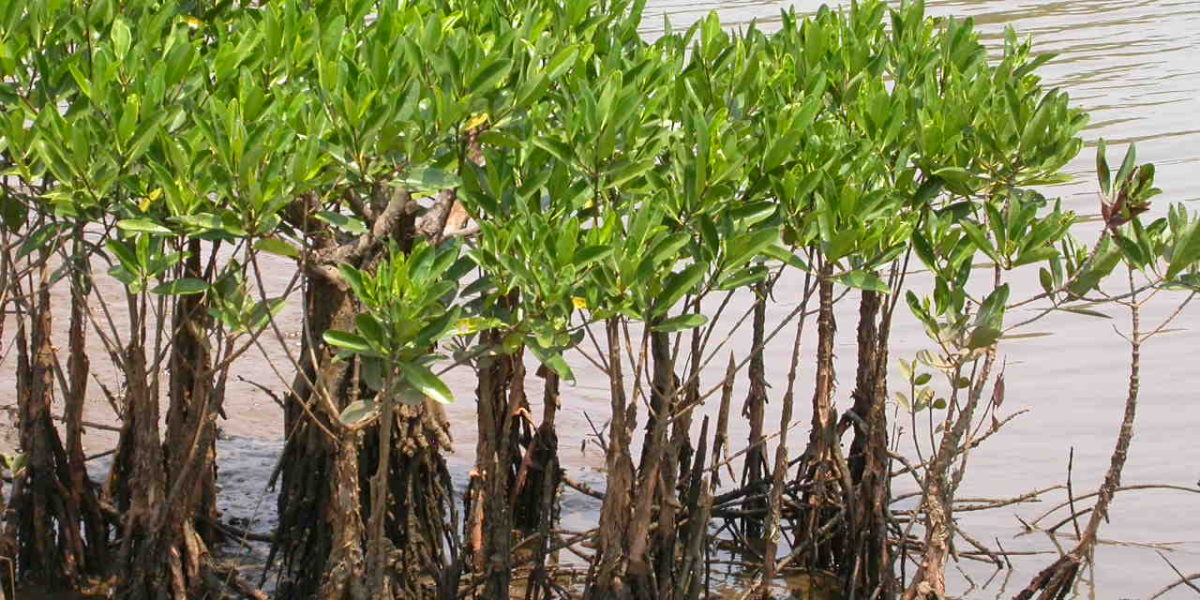
Mangroves are a group of trees and shrubs that live in the coastal intertidal zone. There are about 80 different species of mangrove trees. All of these trees grow in areas with low-oxygen soil, where slow-moving waters allow fine sediments to accumulate mangrove forests only grown at tropical and subtropical latitudes near the equator because they cannot withstand freezing temperatures.
Mangrove forest can be recognized by their dense tangle of prop roots that make the trees appear to be standing on stilts above the water. This tangle of roots allows the trees to handle the rise and fall of tides, which means that most mangroves get flooded at least twice per day. The roots also slow the movement of tidal waves, causing sediments to settle out of the water and build up the muddy bottom.
Mangroves protect shorelines from damaging storm and hurricane, winds, waves and floods. Mangroves also help prevent erosion by stabilizing sediments with their tangled root systems. They maintain water quality and clarity, filtering pollutants and trapping sediments originating from land.
Presently we have several mangrove plots across St. Vincent and the Grenadines including Brighton, Blue Lagoon, Canash, Cumberland and Richmond beaches, Great Head Bay and Union Island. The next article will focus on the various species of mangroves and their individual benefits to the environment.